
In 2025, Hungry Jack's paid $150,240 in penalties after the ACCC issued eight infringement notices over a Garfield-themed toy. The allegation: it didn't comply with Australia's mandatory button battery standards. The same year, the ACCC took Kmart to the Federal Court — millions of units of cosmetic nail glue allegedly sold without adequate warnings, plus button battery products that allegedly didn't comply with mandatory standards. And The Wiggles, of all brands, recalled the Emma Bow headband and admitted it likely breached consumer law over the same button battery rules.
Read that list again. A burger chain. A discount department store. A children's entertainment group. None of them manufactured anything. All of them were on the hook — because in Australia, if you import it, you own its compliance. The factory that made it is largely irrelevant to the regulator standing in front of you.
This is the single most misunderstood fact in China sourcing, and it costs importers real money every year. Here's how the system actually works, and what to check before your next order ships.
Under Australian law, you are the manufacturer

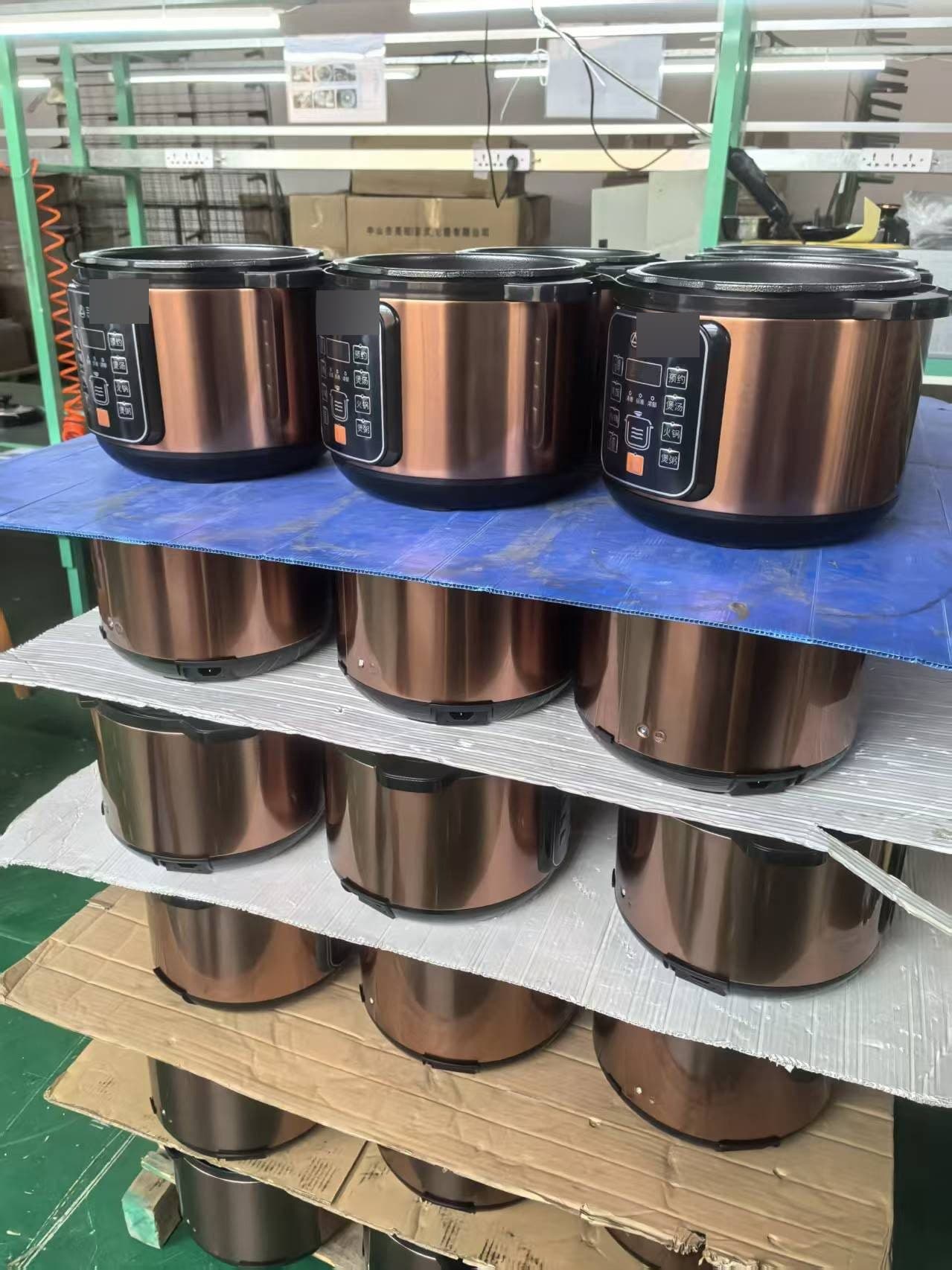
The production line that makes your product. Under Australian law, compliance responsibility sits with you — the importer — not this factory.
The Australian Consumer Law doesn't care where your product was made. Its definition of a "supplier" explicitly includes the manufacturer, the importer, the distributor and the retailer — and more than one of them can be responsible for the same product at the same time. When you bring goods into Australia and sell them, the law treats you as though you made them yourself. The compliance obligation doesn't travel back up the supply chain to Guangdong. It stops with you.
This surprises importers because it contradicts the commercial reality: you didn't design the product, you don't control the production line, and in many cases you've never set foot in the factory. None of that matters. What matters is that you are the first Australian entity in the chain, and the regulator's jurisdiction ends at the border.
Two consequences follow that most importers don't price in. First, the penalties are not a slap on the wrist. Individuals face fines of up to $2.5 million; corporations face penalties of up to $50 million, or three times the benefit gained, or 30 per cent of turnover during the breach period — whichever is greatest. Second, and more practically: Customs clearance is not a compliance check. As one state regulator puts it plainly, never assume imported products have been checked for compliance with Australia's product safety laws, even if they have been cleared by Customs. The container arriving at Port Botany proves exactly one thing — that it arrived.
What mandatory standards actually require

Every product bound for Australia must be checked against the mandatory standard for its category — whatever marks it carries for other markets.
Australia runs a system of mandatory safety and information standards, made by the Commonwealth Minister on the ACCC's advice. If your product falls under one, it must meet the standard's requirements — covering performance, composition, methods of manufacture, design, construction, packaging and labelling — before it can legally be supplied. Supplying goods that don't comply is an offence, full stop.
The ACCC maintains a searchable database of these standards at productsafety.gov.au, and checking it should be step zero of any new product decision. Some examples of what's covered, to calibrate your sense of scope:
Button batteries. Four mandatory safety and information standards, driven by the risk of severe internal burns when a child swallows one. This is the standard behind the Hungry Jack's penalties, the Wiggles recall, and the City Beach court proceedings — all within the last two years. If your product contains a button battery, or is supplied with one, you are in this regime whether you knew it or not.
Toppling furniture. A mandatory standard in force since 4 May 2025 covers freestanding storage furniture: clothing storage units and bookcases 686mm or taller, entertainment units of any height, and hall tables, display cabinets, buffets and sideboards 686mm or taller. Suppliers must attach permanent warning labels, display point-of-sale warnings in store and online, and include the risk information in instruction manuals. Note what this means in practice: compliance isn't just the product — it's the label, the listing page and the manual.
Infant sleep products. New mandatory standards begin on 19 January 2026, covering bassinets, cradles, co-sleepers, cots and mattresses. If you sell in the baby category, this date should already be on your calendar.
Bicycle helmets. The 2024 mandatory standard accepts six different standards as proof of compliance — including the European EN 1078, the US CPSC standard and ASTM F1447. This is worth noticing: sometimes your factory's existing test report, done for another market, already satisfies the Australian requirement. The point was never "test everything from scratch." The point is check.
That's the pattern across the whole system. The standards are public, searchable and specific. The importers who get hurt are not the ones who couldn't comply — they're the ones who never looked.
The RCM is a separate universe

Labelling, warnings and packaging are part of compliance — checked here before the goods leave, not after they land.
Here's where importers get tripped up by a second, parallel system. Everything above is the ACCC's world: general consumer product safety. Electrical products live under a different regulator entirely — and the mark that matters there is the RCM, the Regulatory Compliance Mark.
The RCM is owned by the Electrical Regulatory Authorities Council (ERAC) and the ACMA, defined in AS/NZS 4417, and mandatory since 1 March 2016. It covers two things at once: electrical safety under the Electrical Equipment Safety System (EESS), and electromagnetic compatibility and telecommunications requirements under the ACMA. If you sell electrical equipment in Australia — rice cookers, chargers, lamps, heaters — it needs the RCM, full stop.
Three things importers consistently get wrong about it:
The CE mark is not the RCM. A CE mark is largely a self-declaration by the manufacturer for the European market. It has no legal standing in Australia. A factory showing you a CE certificate and calling the product "certified for Australia" is either confused or hoping you are.
You, the importer, are the Responsible Supplier. Under the EESS, the importer is solely responsible for safety compliance, and this responsibility cannot be delegated to the overseas manufacturer through a local representative agreement. For medium and high-risk equipment (Levels 2 and 3 — which include most household appliances and all AC chargers/adapters), the Responsible Supplier must be an Australian or New Zealand entity and must register the equipment on the national database. Level 3 products additionally need a Certificate of Conformity from an accredited certification body before registration.
The RCM is not a quality mark. Like the CE mark, it denotes a claim of regulatory compliance — not a certification of quality. Don't let the presence of the mark substitute for your own quality control.
The practical upshot: if you're importing anything with a plug, a battery charger or a wireless radio, your compliance homework doubles. The ACCC standards and the EESS/RCM regime both apply, and neither regulator accepts "the other one cleared it" as an answer.
Bans, recalls and the 48-hour rule
Beyond standards, two more mechanisms can reach into your warehouse.
Bans. The Minister can ban products outright — permanently or temporarily — when they're deemed unsafe. Supplying a banned product is an offence regardless of whether you knew about the ban. "My supplier didn't mention it" is not a defence the law recognises.
Recalls and mandatory reporting. If you become aware that a product you've supplied has caused — or may have caused — death, serious injury or serious illness, you must report it to the Commonwealth Minister within two days. Not two weeks. Two days. Failure to report is itself an offence. And if your product is found non-compliant or unsafe, expect a recall: the ACCC publishes every recall on productsafety.gov.au, and your brand name goes on the public list next to the defect description.
Before you commit to any product category, search the recalls database for it. If the category has a history of recalls, that's not a reason to avoid it — it's a reason to understand exactly which standard the recalled products failed, and to make sure yours doesn't fail it the same way.
The misconceptions that cost importers real money
"My supplier says it's certified." Certified to what, by whom, against which standard? A test report is only useful if it references the standard Australia actually requires, was issued by an accredited lab, and covers your exact product and model — not a sibling model, not last year's version. Ask for the report. Read it. Check the standard number against productsafety.gov.au yourself.
"It has a CE mark, so it's fine." The CE mark is a manufacturer's self-declaration for Europe. It is not recognised by Australian regulators, and it tells you nothing about compliance with Australian mandatory standards or the RCM regime.
"Customs cleared it, so it must be compliant." Customs checks imports for prohibited goods, duty and biosecurity — not for compliance with Australian Consumer Law product safety standards. Clearance means the goods entered the country. Nothing more.
"Compliance is the factory's problem." Under Australian law, the factory is outside the regulator's reach and you are inside it. You can — and should — push requirements back onto the factory contractually. But the legal liability sits with you regardless of what your supplier agreement says.
"Only big brands get caught." The ACCC's recent enforcement record says otherwise: a burger chain's toy promotion, a children's headband, 70 product lines at a surf retailer. Enforcement doesn't start with the biggest fish. It starts with whoever's product hurts someone or lands on an investigator's desk.
What to do next: the pre-order compliance file
You don't need a legal department to get this right. You need a checklist, applied before you order — not after the container lands. Here's the file we'd build for any product:
1. Search before you commit. Check the product against the mandatory standards database and the bans list on productsafety.gov.au, plus the recalls database for its category. Ten minutes, before the deposit.
2. Demand the right test reports. Ask the factory for test reports against the specific Australian-referenced standard, from an accredited laboratory. Verify the lab, the standard number and the model coverage. A report against the wrong standard is worse than no report — it creates false confidence.
3. Confirm labelling, warnings and packaging. Many standards are really labelling standards in disguise — the toppling furniture rules are a good example. Get the exact warning wording, label placement and manual content specified in writing, and verify them on the pre-production sample.
4. Electricals: register before you sell. If the product needs the RCM, the Responsible Supplier registration and any required certification must be in place before the goods are offered for sale — not after. This is the importer's job, not the factory's.
5. Keep records. Test reports, declarations of conformity, supplier correspondence about standards — filed by product and model, retrievable on demand. If the regulator ever asks, "show me your compliance file" should be a thirty-second task, not a three-week scramble.
6. Build compliance into QC, not on top of it. The cheapest time to catch a labelling error is during the pre-shipment inspection, not at the port. Our 5-step factory audit checklist covers vetting the factory; our sampling process covers locking the product. Compliance belongs inside both: the golden sample you seal should already carry the correct labels and warnings, and your inspector should be checking them against the standard — not just the workmanship.
The importers who sleep well aren't the ones with the best lawyers. They're the ones who checked the database before they wired the deposit.
This article is general information about the Australian product safety framework, not legal advice. Product-specific obligations should be confirmed with a qualified professional.
About Tasman Global: we help Australian e-commerce brands source from China with evidence, not hope — factory audits, sampling rounds, supplier development, quality control, and landed-cost transparency. → tasmanglobal.net
Sources: ACCC Product Safety, productsafety.gov.au — mandatory standards search, toppling furniture standard, infant sleep products standard, bicycle helmets standard, fines and penalties, mandatory reporting guideline, and news items on Kmart, Hungry Jack's, The Wiggles and City Beach enforcement (accessed October 2026); WA Department of Commerce, product safety for business; ERAC/EESS on the Regulatory Compliance Mark (eess.gov.au); AS/NZS 4417.