
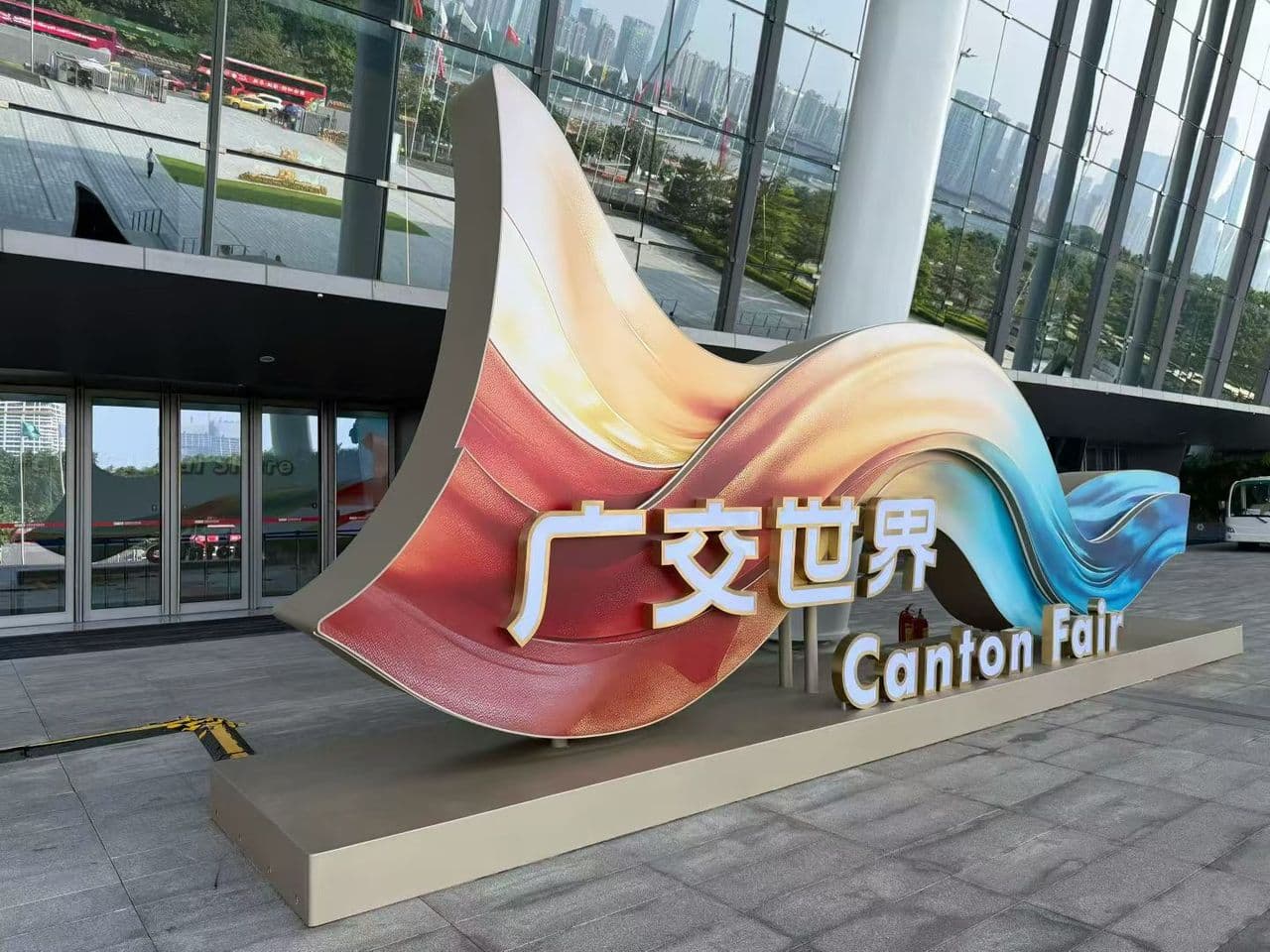
Phase 1 of the 140th Canton Fair (electronics and lighting) is over. Phase 2 (home goods and gifts) closed on 27 October. What opens next — on Friday 31 October in Guangzhou — is the phase most Australian e-commerce brands actually buy from: Phase 3, 31 October – 4 November.
Phase 3 covers toys and maternity/baby products, fashion (apparel, underwear, sportswear, fur and leather, footwear and bags), home textiles and textile raw materials, stationery, and health and leisure goods including food, sports goods, personal care and pet supplies. If your range is apparel, bedding, toys or baby goods, this is your week — and it is also the week where a rushed order creates the most expensive problems. The checks below are the ones worth doing on the stand, before money moves.
## 1. Go to the right zone first

Zone signs at the fair: A 1–8, B 9–13, C 14–16, D 17–20. Photo: Tasman Global.
The fair is big enough that wandering costs you a day. The official Phase 3 floor plan splits the complex into four zones:
- Zone A — apparel. Men's and women's apparel sits in halls 1.1, 2.1, 3.1, 4.1 and 5.1 (plus 2.1Y), alongside children's wear, sportswear and leisurewear, underwear, footwear, and fur, leather and down products.
- Zone C — home textiles and fabrics. Home textiles and textile raw materials and fabrics are in halls 14–16.
- Zone D — toys and baby goods. Toys and maternity/baby products are in halls 17–20.
- Zone B — food, personal care and leisure. Food, personal care products, sports and travel leisure goods, stationery, medical and health products, bathroom products and pet supplies are in halls 9–13.
Plan your route by zone, not by wandering. If you only have one day, spend it in the zone that matches your next order — and leave the rest for the online platform afterwards.
This year is the fair's 140th session — overseas buyers from 14 countries across six continents even made a 140-second MV, "Starlight", for the occasion ([watch it on the Canton Fair site](https://www.cantonfair.org.cn/content-detail?id=c60ed54acc9f46009223a772388c2621)).
## 2. Five questions to ask on every stand
A good price at the fair is not a good order. Before you leave a stand with a supplier's card, get answers to these five:

Ask for composition and the test report behind it. Illustration.
**1. What exactly is it made of — and can you prove it?** Ask for fibre composition (and fabric weight for textiles), and for the test report that backs any claim about it. "Our fabric is compliant" is a sentence, not evidence. If the report exists, ask for a copy; if it does not, that is your answer.
**2. What is the real MOQ, and in what size mix?** A quoted MOQ per style can hide a per-colour or per-size minimum that doubles your order. Confirm the MOQ per style, per colour and the size ratio in the same conversation.
**3. What does the sample cost, and is it deductible?** Confirm the sample fee, the sample lead time, and whether the fee comes off the bulk order — in writing, in the quote. A sample fee that is never deductible is a cost, not a deposit.
**4. When can bulk production actually start?** A sample in 10 days means nothing if the factory's bulk line is full until after Chinese New Year. Ask for the bulk production schedule, not just the sample schedule — and whether a pre-production sample on bulk fabric is included before cutting starts.
**5. What about packaging and labelling?** Barcodes, care labels, country-of-origin marking and carton marking are all cheap to agree on at the fair and expensive to fix after production. Raise them now.
## 3. The Australian check most buyers skip
Here is the part that matters more than any of the five questions above. In Australia, the importer is effectively the manufacturer in the eyes of product safety law: if a product you import does not meet an Australian mandatory standard, is subject to a ban, or is later recalled, that is your problem — not the factory's, and not the fair's. A supplier telling you a product "meets standards" usually means it meets some standard, somewhere. It does not automatically mean it meets the Australian one.
Before you place an order for toys, baby goods, apparel or any children's product, check the ACCC's Product Safety pages for your category: mandatory standards, bans and current recalls. It takes ten minutes and it is the cheapest insurance in the whole order. If the category has a mandatory standard, ask the supplier for evidence against that standard specifically — not a generic test report.
This is also why we do not recommend ordering on the strength of a fair visit alone. A stand conversation tells you a factory can talk. A factory check — business licence, capacity, an independent inspection before you pay the balance — tells you it can deliver. Our 5-step supplier verification checklist walks through that process, and it is the same process we run for clients before they wire money: [How to Verify a Chinese Supplier Before You Wire Money](https://tasmanglobal.net/insights/how-to-verify-chinese-supplier).
## 4. After the fair: samples before bulk, always

Inspect before you pay the balance. Illustration.
The most common Phase 3 mistake is turning a good fair conversation into a fast bulk order. The sequence that avoids it:
1. Shortlist on the stand; confirm the five questions above.
2. Order samples for one or two styles only, and judge them against your tech pack — not against the sample the factory chose to display.
3. Confirm a golden sample, then require a pre-production sample made from bulk fabric before cutting starts.
4. Inspect before you pay the balance — not after the goods land.
If a factory will not agree to that sequence, that is information too.
## If you are not flying to Guangzhou
You do not need to be at the fair to use it. Phase 3 exhibitors are also reachable through the fair's online platform, and the same five questions work over email — with one addition: ask for a live video walkthrough of the factory, not just a catalogue. A catalogue shows products. A walkthrough shows whether the factory exists, what its floor looks like, and whether the person you are dealing with actually works there.