
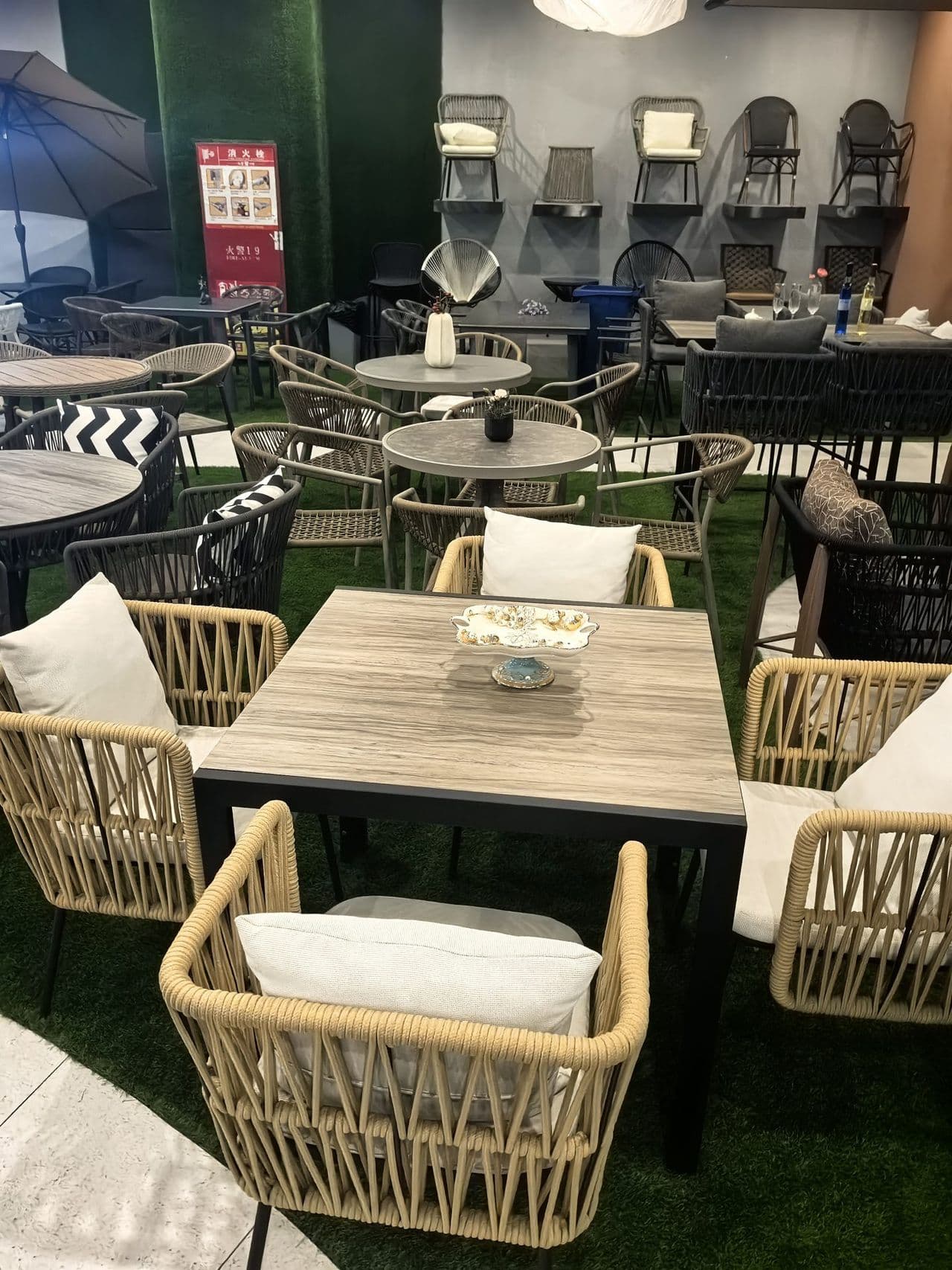
Picture this. You're a Brisbane homewares brand. You've spent two months going back and forth with a factory in Guangdong on a new outdoor chair. The third sample arrives and it's right — the weave is tight, the colour matches your swatch, the frame feels solid. You sign off, pay the 30% deposit, and start planning your summer range launch.
Ten weeks later the container arrives. The chairs look… close. But not the same. The weave is looser in places. The colour is a shade off. Two of the frames wobble. Your customer notices before you do — she posts a photo next to the product page and asks, in the comments, whether you changed suppliers.
You didn't change suppliers. Your factory just stopped making the sample and started making the product.
This is the golden sample trap, and it catches experienced importers, not just beginners. The sample proved what the product could look like. It said nothing about what the factory could repeat — 500 times, 5,000 times, identically. Understanding that gap, and closing it with a proper sampling process, is the difference between a launch and a warranty queue.
What a "sample" actually means (it's four different things)

The sample: weave tension, finish, colour — every detail you're signing off on. Photograph all of it.
The word "sample" causes half the trouble in China sourcing, because it means four completely different things depending on which stage you're at. Know which one you're holding before you judge anything by it.
1. Stock sample. An off-the-shelf piece the factory already had in the warehouse. It tells you about general material feel and build quality — nothing about your spec. The first sample a factory sends quickly is usually this one: not your design, not your materials. Useful for a first impression, worthless as an approval basis.
2. Custom sample. Built to your spec and design for the first time. This tells you whether the factory can execute your design — but it's typically made with disproportionate care: hand-finished, reworked until perfect, sometimes by the factory's best technician rather than the regular line. Treat it as proof of capability, not proof of repeatability.
3. Pre-production sample (PP sample). Made under real production conditions — production tooling, production materials, production workers — just before the mass run. This is the single most important sample in the entire process. It's the only one that previews what your bulk order will actually look like.
4. Golden sample. The final approved piece, sealed and kept as the reference standard. Both sides sign it. Every future inspection measures production against this physical object — not against a spec sheet, not against a memory.
🚩 Red flag: If your factory uses the word "sample" loosely and you've never explicitly agreed which stage you're at, you're probably approving production from a stock or custom sample — and your real product is going into production unverified.
Why production drifts from the sample you approved

Semi-finished frames on the production floor: this is what the line makes before anyone's watching.
Here's the uncomfortable truth: your golden sample was probably made differently from your production run — not out of malice, but out of process. Samples get the A-team, production gets the roster. Samples get iterated; production gets a deadline. The drift usually comes from five places:
1. Different hands. The sample was made by a senior technician. Your 5,000 units are made by whoever's on shift — including new hires. Skill variance across a production line is the single biggest cause of sample-to-production drift.
2. Different materials. Your sample used the good batch — first-grade rattan, the exact powder-coat. Production runs buy in bulk, and bulk means variance: a different dye lot, a substitute weave, a cheaper foam that "meets spec" on paper. Without locked-down material specs and incoming QC, the factory will quietly optimise for cost.
3. Different tooling and jigs. Samples are often shaped by hand or on prototype tooling. Production uses the real jigs — which may be worn, misaligned, or just different. A 2mm variance in a jig becomes a wobble in 5,000 chairs.
4. Rushed timelines. Your sample had no deadline. Your production run does — and when the factory falls behind (they will), the pressure shifts from quality to throughput. Corners get cut in the exact order you'd predict: finishing, then inspection, then materials.
5. Subcontracting. The factory that made your beautiful sample may hand your production order to a smaller workshop down the road — same region, lower cost, looser standards. You approved Factory A; Factory B made your chairs. This is routine in Guangdong and Zhejiang, and you won't know unless you audit.
The fix isn't a better sample. It's a better process — one that verifies production conditions, not just the prototype. Here's the one that works.
The 4-stage sampling process that actually works
Forget "send sample, approve sample, place order." That three-step dance is how you end up with a container of almost-chairs. A sampling process that actually protects you has four stages, each with a different question to answer.
Stage 1 — Design sample: "Can you make it?" This is your proof of capability. You're checking that the factory understands your drawings, can source roughly the right materials, and can produce the design at all. Expect imperfections. What you're really evaluating: communication, willingness to iterate, and basic competence. Don't approve production here — approve the factory.
Stage 2 — Pre-production sample: "Can you repeat it?" This is the critical one most importers skip. Insist the PP sample is made on the production line, by production workers, with production materials and tooling — not in the sample room. If the factory resists, that's your answer about their process. The PP sample should be nearly indistinguishable from what you want in the container.
Stage 3 — Golden sample: "What are we measuring against?" Once the PP sample is right, seal it. Both sides sign and date it, photograph every angle, and record the exact materials, colours (with Pantone or RAL references, not "blue"), dimensions with tolerances, and finish standards. This physical object — plus its documentation — becomes the inspection standard. Without it, "quality" is a matter of opinion, and you'll lose every argument.
Stage 4 — Production monitoring: "Are you still making it?" The golden sample means nothing if nobody checks production against it. Build in at least one during-production inspection (at 20–30% completion, when problems are still fixable) and a pre-shipment inspection against the golden sample and its documentation. The factory should expect you — or your inspector — on the floor.
What to do: Put the four stages in your purchase contract, with the PP sample and golden sample as explicit order milestones. No PP sample approval, no mass production. No golden sample, no shipment.
How to read it: If a factory pushes back on PP sampling ("it takes too long," "trust us"), they're telling you their production line can't reproduce their sample room. Believe them — and find another factory.
The showroom is not the factory

The workshop behind the showroom: materials, frames and parts in active production.
Every factory has two faces: the showroom and the floor. The showroom is theatre — perfect lighting, the best pieces, staff who've rehearsed the tour. The floor is truth — and it's where your order will actually be made. Smart importers spend 20 minutes in the showroom and two hours on the floor.
When you're on the floor, look for the unglamorous stuff: material storage (covered or rusting?), work-in-progress (organised or chaotic?), the QC station (is there one?). Ask to see the production schedule — a factory that's too busy for your order will be too busy to make it well. And always, always visit before you place the order, not after there's a problem. Tasman Global's supplier verification process covers exactly this ground: we audit the floor, not the showroom.
The showroom tells you what the factory wants to sell you. The floor tells you what they'll actually deliver. Build your sampling process around the second, and the first becomes irrelevant. For the final check before your goods ship, use a pre-shipment inspection checklist measured against your golden sample.
🚩 Red flag: If a factory won't let you on the production floor — or only shows you a "model" workshop — walk away. Legitimate manufacturers are proud of their floor.
The misconceptions that cost importers real money
"The sample was perfect, so production will be fine." The most expensive sentence in sourcing. A perfect sample proves the factory can make one good unit with unlimited time and attention. It says nothing about whether they can make 5,000 identical ones on a deadline. Judge the process, not the prototype.
"We have a long relationship, so we can skip PP sampling." Relationships don't run production lines — shift workers, material batches and jigs do. Even great factories drift when nobody's watching. The four stages aren't about trust; they're about verification. Good factories welcome them.
"Our QC team will catch any issues at the end." End-of-line QC catches defects — it doesn't prevent them. By the time 5,000 chairs are finished, "catching" a systemic problem means rework, air freight, or a very awkward call with your customer. The four-stage process moves quality upstream, where fixes are cheap.
"Sampling adds too much time and cost." A PP sample costs a few hundred dollars and two weeks. A container of unsellable product costs tens of thousands and a season. Sampling isn't a cost — it's the cheapest insurance in your supply chain.
What to do next
Your sample is a promise. Your sampling process is how you make the factory keep it.
Start with your next order: insist on a production-line PP sample before you approve mass production, seal a golden sample with full documentation, and put both in the contract as milestones. Then verify — on the floor, during production, and before shipment.
If you'd like help building a sampling process for your next order — or auditing the factory behind your current one — talk to Tasman Global. We verify suppliers on the floor, not in the showroom.