
Your goods passed inspection. The production run was clean, the samples matched, the factory did good work. Time to relax?
Not quite. Some of the most expensive sourcing failures we've seen had nothing to do with manufacturing. They happened after the goods were finished — in the warehouse, on the pallet, in the back of the truck, inside the container. The last 5% of the job causes a wildly disproportionate share of damage claims, and once the container doors close, proving whose fault it was becomes nearly impossible.
Here's what we check between “finished goods” and “shipped,” photographed during a September visit to a furniture factory in Foshan.
Staging: does the volume match the story

Finished chairs staged and wrapped, waiting for packing. Volume and order tell their own story.
A warehouse full of finished goods, neatly staged by order, tells you this factory ships regularly. Regular shippers have stable packing processes. What worries us is the opposite: finished goods piled wherever they fit, mixed orders, no visible system. That's where cartons get mislabeled and your 200 chairs arrive as somebody else's 200 chairs.
The carton count: we count, we don't trust

Cartons palletised and wrapped. Before any of this gets loaded, we count.
This is the least glamorous check we do and one of the most important. Carton count versus the packing list, measured against the purchase order. Short shipments are rarely dramatic — they're three cartons missing from a 400-carton load, discovered when your 3PL in Brisbane calls to ask where the rest is. By then, getting the factory to make it right involves international phone calls and a lot of goodwill you've already spent.
We count every carton. We photograph the count. Boring, and worth it every time.
Packing quality: the box matters too

Packing materials and finished cartons. We check the box, not just what's in it.
Your chair survived production. Will it survive a forklift, a container stack, and 25 days at sea? We check carton strength, sealing, and labeling — and we do a basic drop test on a packed carton. Not to destroy it. To see if the factory packed for the real journey or for the photo.
Labels matter more than people think. Wrong or missing shipping marks mean your cartons get misrouted at the port, and port storage fees accumulate fast. We verify every mark against the shipping instructions before loading starts.
The packing floor: moisture and mayhem

The packing floor. Clean, dry, organised — or the place your goods pick up their first damage.
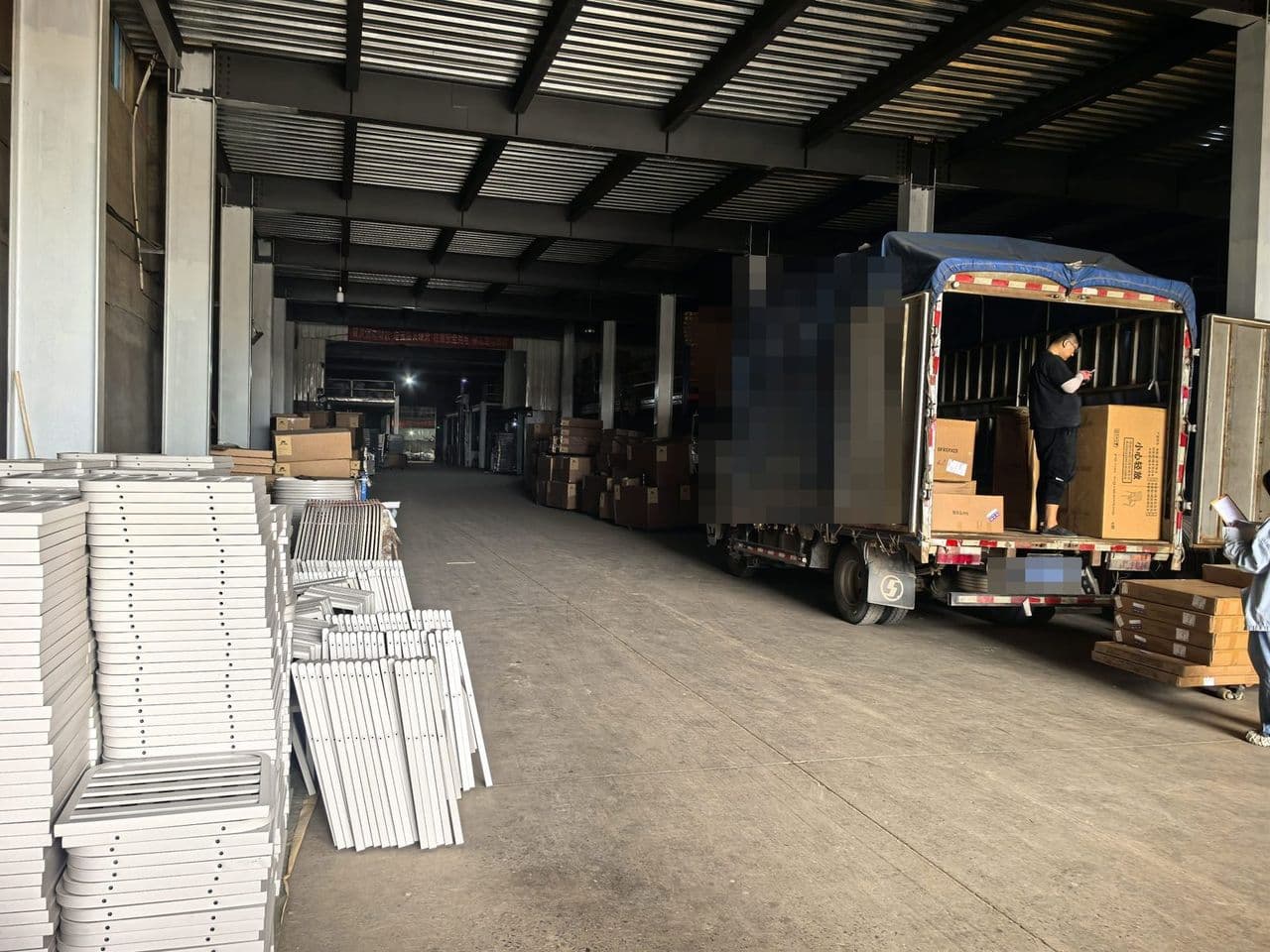
Two things we look for here: moisture and chaos. A damp warehouse floor plus a sealed container equals mould, and mould on arrival is one of the hardest claims to win. We check the floor, the ventilation, and whether goods sit directly on concrete. Then we look at the general state of organisation. A packing area that runs on a system produces consistent results. One that runs on shouting produces surprises.
Loading: supervised, photographed, sealed

Loading supervised at the warehouse. The last pair of eyes before the doors close.
This is the check most buyers skip entirely, and it's the one we'd never skip. We supervise loading: carton count re-verified as each pallet goes in, stacking checked (heavy at the bottom, nothing crushable under anything), moisture protection confirmed, and the container itself inspected before a single carton enters — floor condition, door seals, any daylight through the walls, any smell of chemicals or damp from the previous cargo.
Then we photograph everything and record the seal number. If anything arrives damaged, that photo set is your evidence. Without it, you're arguing about what happened inside a steel box somewhere in the Pacific, and nobody wins that argument.
The unglamorous truth
Nobody frames their container-loading photos. There's no showroom for good packing. But in our experience, the buyers who lose money on China sourcing rarely lose it on the factory floor. They lose it in the last 5% — the part nobody supervised because the hard part was supposedly over.
We supervise it. Every order, every container.
Want eyes on your shipment? Our pre-shipment inspection covers finished-goods checks, carton counts, packing verification and supervised loading, with a photo report before the container seals. Talk to us — or start with the factory audit checklist to see how we think.